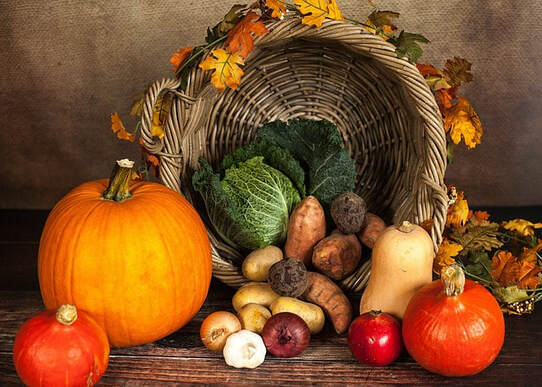
 Image by Sabrina Ripke from Pixabay Songs of thankfulness and praise from around the world will be presented at the 9:00 a.m. service. Ukulelist Stuart Yoshida joins us in the chancel.
Songs of gratitude and joy carry over into the 11:00 a.m. service as well on this last Sunday of the liturgical year. At the Prelude, a sprightly selection from the Baroque era by violinist Harmony Tucker is offered in Handel's "Allegro con brio" from Sonata No. 4 in D Major. The Chancel Choir sings a paraphrase of Psalm 98 ("Oh, Sing to the Lord a New Song") in a lilting setting exuding a sense of a 'quiet joy' by John Leavitt. Harmony Tucker and bassist Con Woodall accompany. At the Postlude, Sigfrid Karg-Elert's chorale prelude on "Now Thank We All Our God" closes worship this holiday weekend, a staple of the organ repertoire.
0 Comments
 Image by OpenClipart-Vectors from Pixabay At 9:00 a.m., songs of joy and changing seasons led by vocalist Lucas Jackson, guitarist Alan Skowron, bassist Peter Strening and percussionist Nick McCulloch.
At 11:00 a.m., a prelude on the Welsh tune "Ash Grove" (commonly associated with the text "Let All Things Now Living") opens worship as a duet for organ and handbells. The Plymouth Ringers also offer a shimmering accompaniment to the harvest hymn-anthem "Autumn Carol" by Russell Schulz-Widmar. Lastly, the organ brings worship to a resounding finish in ecstatic expressions of joy in "Chant de Joie" (Song of Joy) by Jean Langlais. 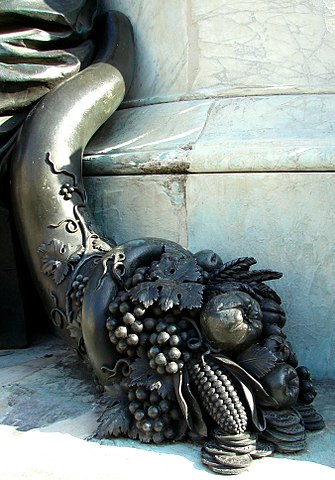 By Vassil - Sculpture: Jean-Baptiste Pigalle, Photo: Vassil, CC BY 3.0, https://commons.wikimedia.org/w/index.php?curid=4284261 By Vassil - Sculpture: Jean-Baptiste Pigalle, Photo: Vassil, CC BY 3.0, https://commons.wikimedia.org/w/index.php?curid=4284261 Songs of gratitude and thanksgiving. Overflowing praise.
Invited into worship by J.S. Bach's setting of the hymn tune "Liebster Jesu, wir sind hier" ("Dearest Jesus, We Are Here"), we soon hear the virtual efforts of members of our Chancel Choir in the Shaker tune "Simple Gifts," interwoven with the infamous "Pachelbel's Canon" in an arrangement by Donald Moore. Lastly, familiar to anyone who has owned an E. Power Biggs organ album, the rousing and triumphant strains of Sigfrid Karg-Elert's play on the ultimate hymn of thanksgiving: "Now Thank We All Our God." The Thanksgiving Eve Vespers service offers an international expression of praise from Scotland, Taiwan, and Africa. Ukuleleist Stuart Yoshida joins us. 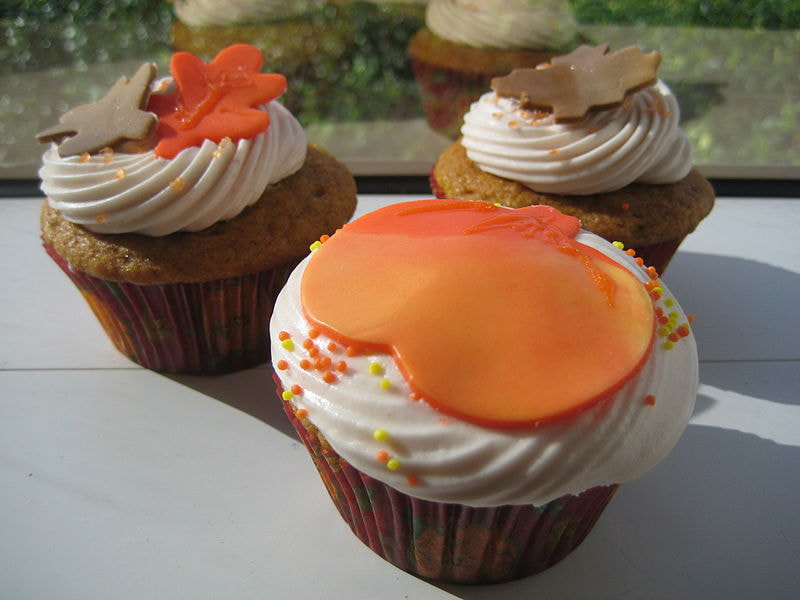 Thanksgiving Cupcakes by Kristin Ausk Source: Wikimedia Commons This Sunday morning, you will hear three settings of the classic hymn Now Thank We All Our God from three very different perspectives. The Prelude is a brief fanfare rendition of the 17th century tune by composer Charles Callahan, complete with jazz harmonies. During communion at 9:00 a.m., a chorale prelude by a contemporary of J.S. Bach, Georg Friedrich Kauffmann, will be offered and composed only a few decades after the original tune's creation. And finally at the Postlude, a tour de force arrangement by late Romantic/early 20th century German composer Sigfrid Karg-Elert.
The Chancel Choir will sing Mozart's sublime Laudate Dominum, the fifth movement from Vesperae solennes de confessore ("Solemn Vespers for a Confessor") of 1780 at 11:00 a.m. The soloist is soprano Blair Carpenter, who will also join Bobby Brannock as cantor for the 6:00 p.m. service. |
|
 RSS Feed